
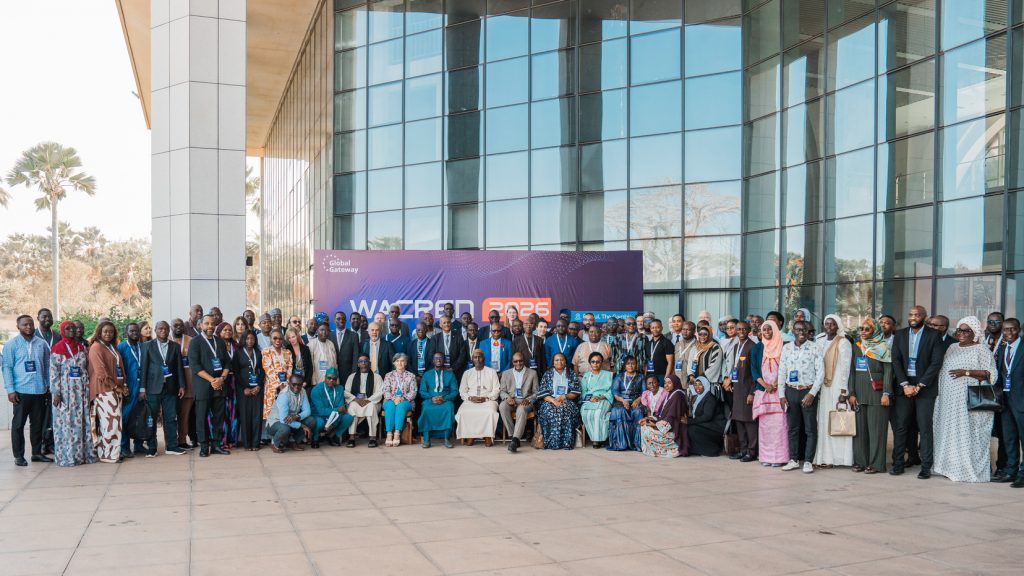
Banjul, the capital of The Gambia, became a focal point of Africa’s digital transformation agenda as it hosted the 2026 West and Central African Research and Education Network (WACREN) Conference from March 23 to 27. The high-level gathering brought together policymakers, researchers, university leaders, technologists, and international partners to deliberate on the continent’s digital future under the theme “Connected Futures: Advancing Africa’s Digital Sovereignty Through Open Collaboration.” Held at the Sir Dawda Kairaba Jawara International Conference Centre, the event highlighted the growing importance of research and education networks in enabling innovation, connectivity, and knowledge exchange across Africa.
At the heart of the conference was a powerful message: Africa must take control of its digital destiny. Speakers emphasized that digital sovereignty – defined as the ability of African institutions to manage their own data, infrastructure, and technological ecosystems – is no longer optional but essential for sustainable development. Opening the conference, Gambia’s Minister of Higher Education, Research, Science and Technology, described the moment as a turning point. He stressed that Africa’s future would increasingly depend on its capacity to generate knowledge, govern data, and build resilient digital systems tailored to its needs. Government representatives echoed this sentiment, calling for stronger investments in cybersecurity, artificial intelligence, and climate data systems. The discussions underscored that digital sovereignty is critical not only for academic advancement but also for addressing broader challenges such as public health, food security, and climate change.
The conference also highlighted the importance of continued international support for Africa’s digital agenda. The European Union announced the rollout of AfricaConnect4, a new phase of its flagship program aimed at expanding digital infrastructure and services for African universities through National Research and Education Networks (NRENs). The initiative will enhance connectivity, support secure data exchange, and promote collaboration across institutions. It builds on earlier phases that have already connected thousands of institutions across the continent, playing a key role in improving access to research and education resources.
A key highlight of WACREN 2026 was the strong focus on regional collaboration. Participants explored how NRENs can enhance connectivity among universities and research institutions, enabling high-performance computing, open science, and cross-border knowledge sharing. Technical sessions and workshops provided practical insights into network management, cybersecurity, and data-sharing frameworks. UbuntuNet Alliance (UA), the regional Research and Education Networks of Eastern and Southern Africa was represented by the Chief Executive Officer and the Projects Manager.
As the dust settles on WACREN 2026 conference, attention now shifts to the UbuntuNet-Connect 2026 conference under the theme “Shaping Digital Horizons” planned to take place from October 29-30, Lilongwe, Malawi, the Warm Heart of Africa. The UbuntuNet-Connect 2026 will explore how NRENs, partners, and policymakers can collectively shape digital futures that are secure, open, innovative, and responsive to regional priorities. Keynote presentations, panel discussions, and paper presentations that address topics and anchor discussions on the conference theme are invited. For more information, please visit https://ubuntunet.net/uc2026/.