
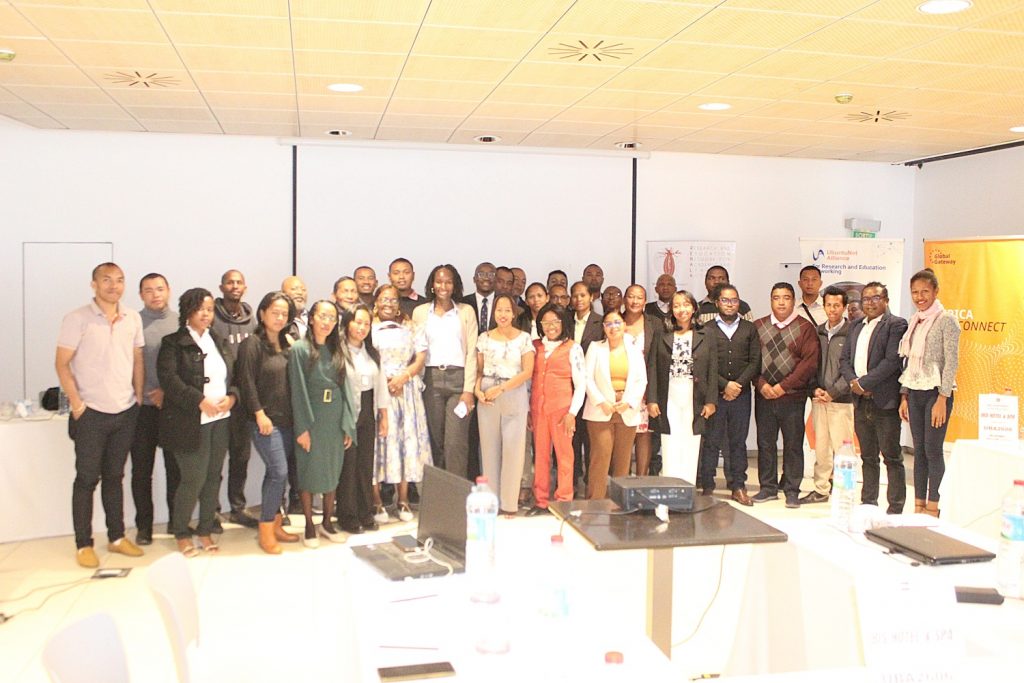
UbuntuNet Alliance has conducted the second Open Institutional Repository Stewardship training under the project “Unlocking Potential: Elevating Open Institutional Repositories in Africa for Global Impact”, supported by Invest in Open Infrastructure (IOI) through the Network Adoption Fund. Hosted in Madagascar by iRENALA, the country’s National Research and Education Network, the workshop brought together 35 librarians from research and education institutions for focused capacity building on the management and sustainability of Open Institutional Repositories.
The Madagascar workshop follows the first training held in Zambia and marks the second in a series of 16 planned trainings across the region. These trainings are a crucial part of the project’s wider ambition to train 560 librarians as repository stewards who can support their institutions in making African research more visible, accessible, interoperable, and globally impactful.
A key feature of the Madagascar training was its delivery in French. This was an important demonstration of inclusion within a community that is diverse not only in geography and institutional context, but also in language. By delivering the training in French, UbuntuNet Alliance ensured that participants could engage more fully, ask questions with confidence, and connect the content directly to the realities of their institutions. It also reinforced the message that no community should be left behind because of language.
During the workshop, participants explored the practical and strategic work required to build strong and sustainable repositories, including repository management, metadata quality, discoverability, policy development, governance, preservation, and institutional readiness. The training emphasized that repositories are not only technical platforms, but institutional services that require people, policies, workflows, leadership support, and continuous stewardship.
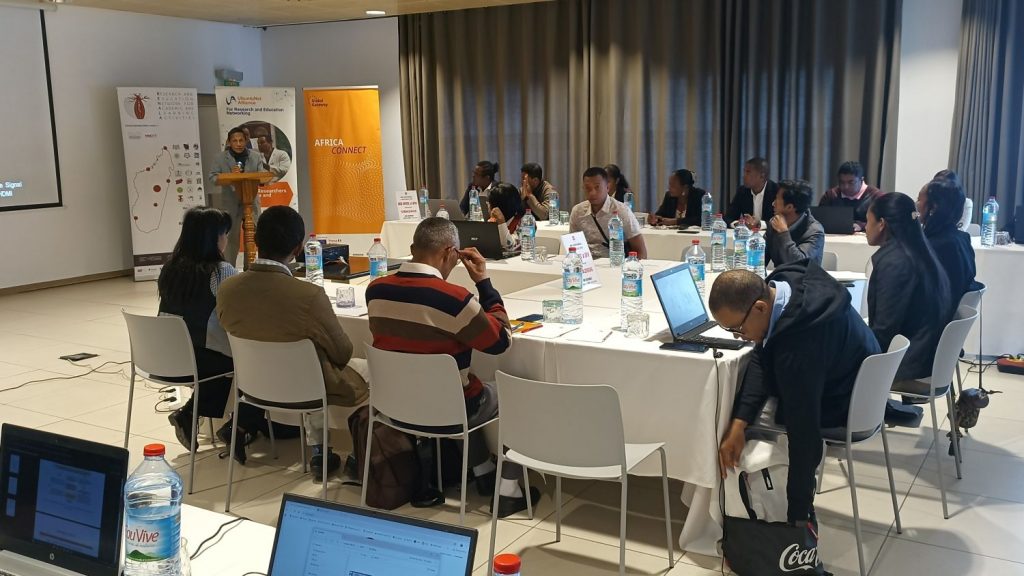
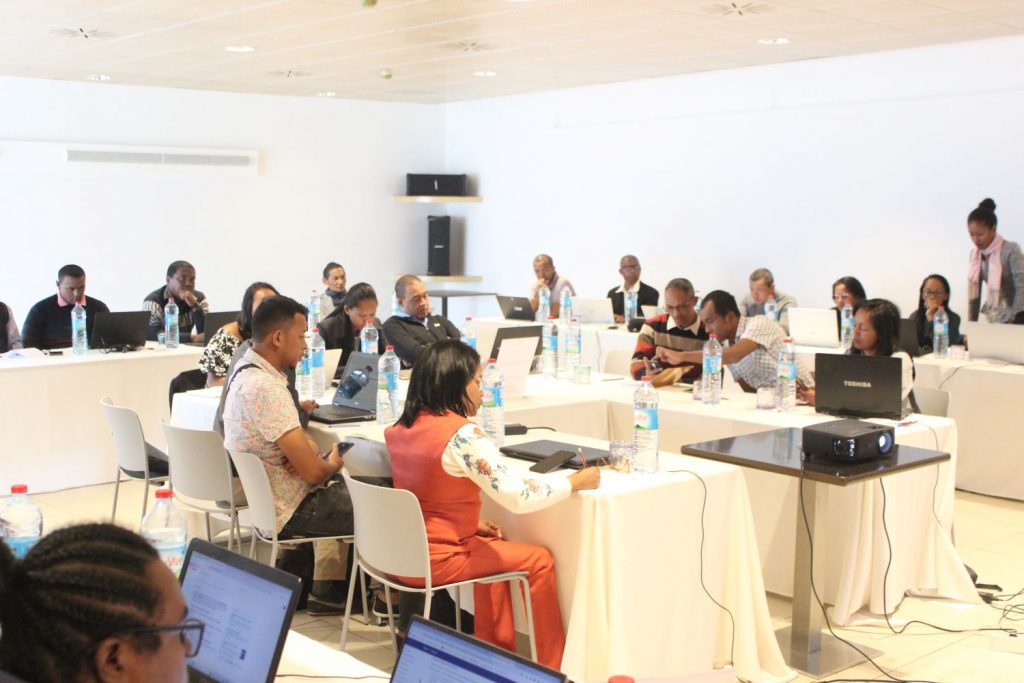
National Research and Education Networks are playing a central role in coordinating and supporting the rollout of these initiatives. In Madagascar, iRENALA’s role as host demonstrated how NRENs connect institutions, convene communities, and support national engagement. Across the wider project, member NRENs remain essential partners in ensuring that the work is rooted in local contexts and sustained through trusted national networks.
The Madagascar workshop shows that the project is firmly underway, but the work continues. As UbuntuNet Alliance and its partners move through the remaining trainings, each workshop adds to a growing community of librarians equipped to strengthen open research infrastructure across Africa. By investing in people, working through NRENs, and embracing linguistic diversity, the project is laying the foundation for more inclusive, sustainable, and impactful Open Institutional Repositories across the region.