
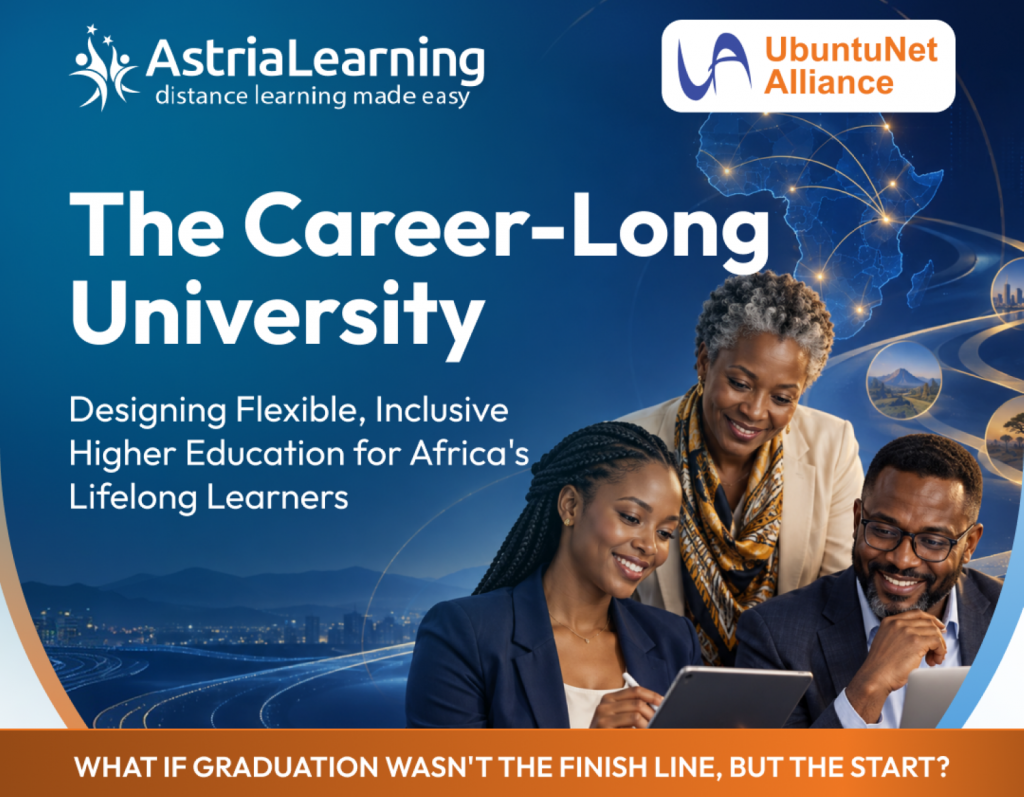
Join UbuntuNet Alliance and Astria Learning on 30 September 2026 for a webinar exploring how universities can support learners throughout their careers.
Graduation is a major milestone, but the need to learn continues long afterwards. As careers, technologies and industries change, people need opportunities to develop new skills, update their knowledge and return to education at different stages of their lives.
How can African universities respond—and make these opportunities accessible to people balancing education with work, family and other responsibilities?
UbuntuNet Alliance, in collaboration with Astria Learning, invites the research and education community to a webinar on building a career-long relationship between universities and Africa’s lifelong learners.
The discussion will explore the breadth of lifelong learning, including professional and short courses, reskilling and upskilling, executive education, postgraduate study, and modular learning that enables learners to build towards further qualifications. It will also consider recognition of prior learning and pathways that help alumni return to study.
Flexibility and inclusion will be central to the conversation. For working adults, parents, entrepreneurs and learners outside major urban centres, meaningful access depends on how learning opportunities are designed and delivered.
The webinar aims to help university leaders and other higher-education stakeholders move from broad ambitions towards practical institutional choices that support learners throughout their lives.
Who should attend?
The session will be particularly relevant to university leaders, academic staff, continuing and professional education teams, digital and distance-learning practitioners, student support and alumni relations teams, NRENs, and others interested in widening participation in higher education.
Event details
- Date: Wednesday, 21 October 2026
- Time: 14:00 – 15:00 CAT
- Platform: Zoom
Register here to attend the webinar.
Join the conversation and share this invitation with colleagues working to make higher education more flexible, inclusive and responsive to learners’ changing needs.