
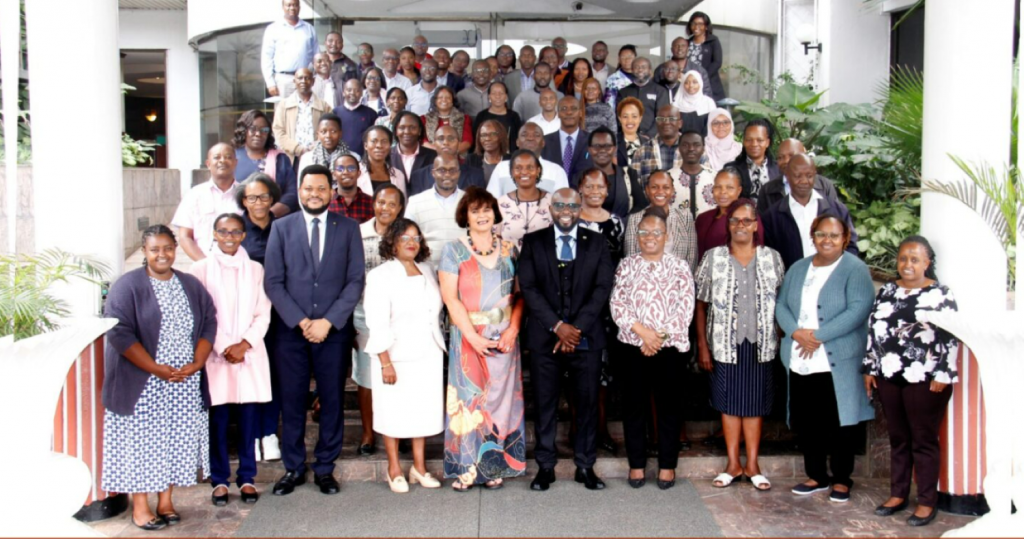
Members of Kenya’s scholarly publishing community attended a three-day workshop from 18-20 February 2026, focussing on
strengthening Diamond Open Access journal publishing in the country. The three-day training brought together journal editors, publishers, librarians, and researchers to build capacity in managing scholarly journals aligned with global best practices. Organized collaboratively by the Kenya Libraries and Information Services Consortium (KLISC), the Directory of Open Access Journals (DOAJ), the Academy of Science of South Africa (ASSAf), the Kenya Education Network (KENET) and partners including the Technical University of Mombasa and Adventist University of Africa, the workshop focused on strengthening editorial quality, governance, and sustainability of journals within the African research ecosystem.
Central to the workshop was the emphasis on Diamond Open Access publishing models, which promote free access to research without charging authors or readers. Participants engaged in hands-on sessions covering editorial workflows, peer review systems, Open Journal Systems (OJS) management, and indexing requirements for global platforms such as DOAJ. These sessions aimed to improve journal quality, discoverability, and credibility, ensuring that African research outputs can compete and be visible on the global stage. The training also highlighted ethical publishing practices and transparency, key pillars for strengthening trust in scholarly communication.
KENET played a significant enabling role in the success of the workshop, demonstrating the value of National Research and Education Networks (NRENs) in supporting research and scholarly communication. By providing the underlying digital infrastructure that facilitates access to online platforms, repositories, and journal management systems in Kenya, KENET continues to ensure that institutions are able to participate effectively in modern scholarly publishing ecosystems. Its involvement reflects how NRENs go beyond connectivity to actively support capacity building and knowledge dissemination within the research community.
The workshop highlighted the importance of collaboration in achieving sustainable improvements in scholarly publishing. Bringing together organizations such as library consortia, academic institutions, and international partners enabled a shared approach to addressing systemic challenges. Collaborative efforts are essential for building trust, sharing expertise, and aligning African publishing practices with global standards.
The Kenya workshop serves as a strong example of the critical role NRENs across Africa play in advancing open science and scholarly communication. As highlighted in broader research, NRENs are key enablers of collaboration and the sharing of research outputs, supporting the infrastructure needed for open access publishing and data exchange.