
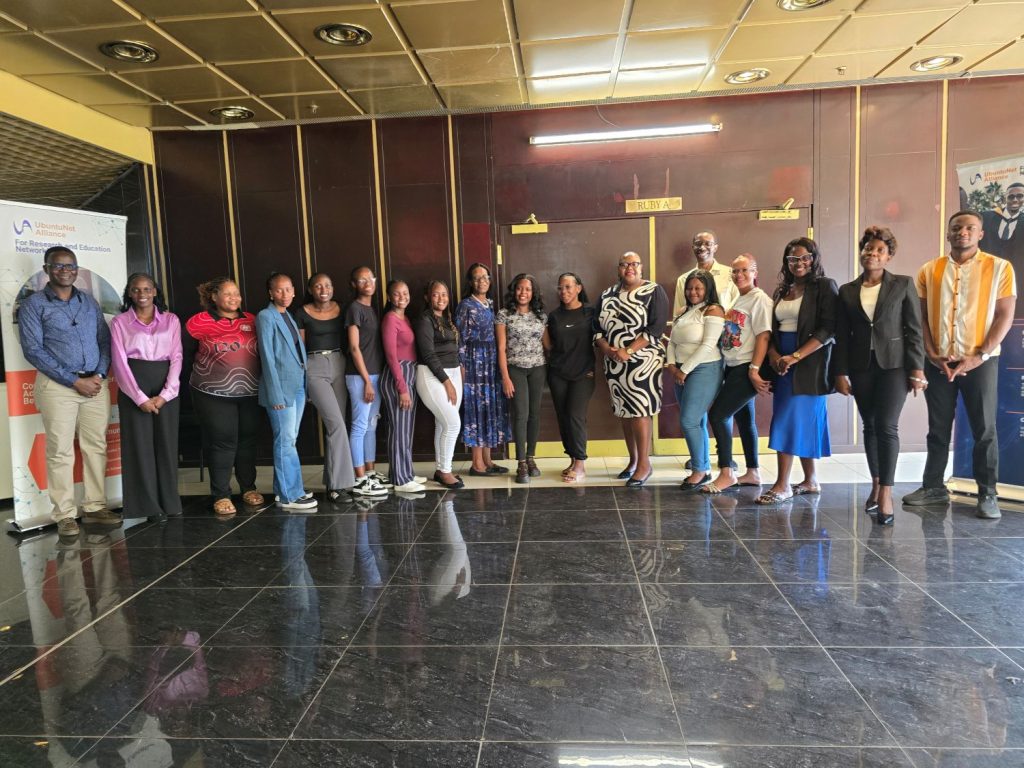
The long exciting journey of the Women Hackathon 2025 came to a fulfilling end at the UbuntuNet-Connect 2025 Conference which was held at the iconic Rainbow Towers Hotel in the Sunshine City of Harare, Zimbabwe. The UA Women Hackathon is an annual event funded under the AfricaConnect4 project, co-funded by the European Union. The Hackathon 2025, themed ‘Innovations for climate change, adaptation and mitigation,’ sought to address the gap in innovations supporting climate change adaptation and mitigation, and the gender gap in software applications development in Africa. This came against the backdrop of the past two successful regional hackathons, consisting of 35 young women cumulatively.
The Hackathon 2025 kicked off as a virtual session with 63 passionate participants, each eager to make an impact. The dynamic event united the brilliant young women innovators from across the region to tackle the urgent challenges of cliate change through technology-driven solutions. From this pool, 4 standout teams each consisting of 3 participants each advanced to the final stage, an intensive in-person Hackathon where they continued the collaborated to refine their ideas. Each team presented a unique project aimed at boosting urban climate resilience and preparedness, showcasing the power of women-led innovation in shaping a sustainable future. It was an exciting and collaborative event aimed at empowering women to develop innovative solutions for climate change adaptation and mitigation.
Retracing the Exciting Journey
The Women Hackathon 2025 was divided into two phases with the first part being held virtually. From May 12 to June 13, 2025, the Hackathon kicked off with a call for papers, inviting participants to submit their ideas and projects related to climate change. By the June 13 deadline of submission, numerous submissions were received, showcasing diverse approaches to tackling climate-related challenges. Following this, the selection process took place from June 14 to June 30, 2025, where 21 teams were chosen based on the quality and feasibility of their proposals. Notifications were sent on June 30, officially welcoming the selected teams to participate in the Hackathon. The onboarding process began in the first week of July, where teams were introduced to the Hackathon’s objectives and provided with a clear problem statement. During the second week, teams defined their methodologies and designed prototypes for their proposed solutions. By the third week of July, teams focused on developing their prototypes, utilizing collaborative tools such as Microsoft Teams, Zoom, GitHub, and Slack to foster communication and teamwork. In the fourth week, teams finalized their prototypes ready for the D-day presentation and evaluation.
The Phase II, in-person, was held on 27 – 29 October, 2025 at the Rainbow Towers hotel, Harare, Zimbabwe where the 4 top teams converged to go through a reflective 3-day mentorship under their experienced mentors. The Mentors provided an all-round guidance and mentorship to the 12 young innovators. They also employed speed mentoring sessions which allowed the teams to receive and share quick feedback and advice. The exhilarating event concluded with a cultural mentorship session in which participants were taken on a guided tour of the City of Harare as well as visiting the Harare Institute of Technology and the University of Zimbabwe, celebrating diversity and encouraging peer-to-peer engagement, reinforcing the event’s focus on community and collaboration.
Unveiling the Final Innovators
Position One: Team Uganda – CityAir+
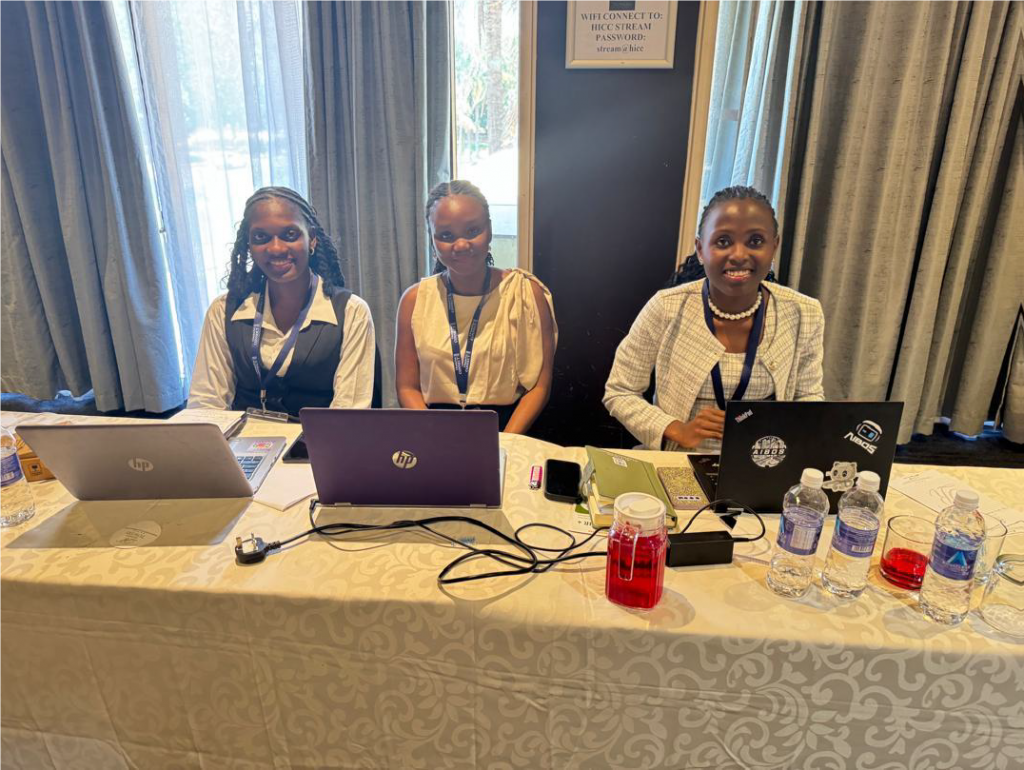
Team Uganda consisting of Ms. Martha Kisakye, Ms. Martha Namugga, and Ms. Daphne Nakamyuka were crowned the winners of the Women Hackathon 2025. Their innovation, christened “CityAir+” took the UbuntuNet-Connect 2025 participants through a Community-Driven, IoT-Based Carbon Emission Monitoring and Response System solution. CityAir+ is an innovative system designed to monitor urban air quality and provide real-time alerts to communities. By deploying IoT sensors across urban areas, the project aims to collect air quality data and transform it into actionable public alerts using LED indicators and digital displays. This proactive approach not only raises awareness about air pollution but also encourages immediate community action. The system supports local governments by supplying critical data for policy formulation and regulatory enforcement, ultimately contributing to climate resilience efforts.
Position Two: Team Malawi – DisasterShield
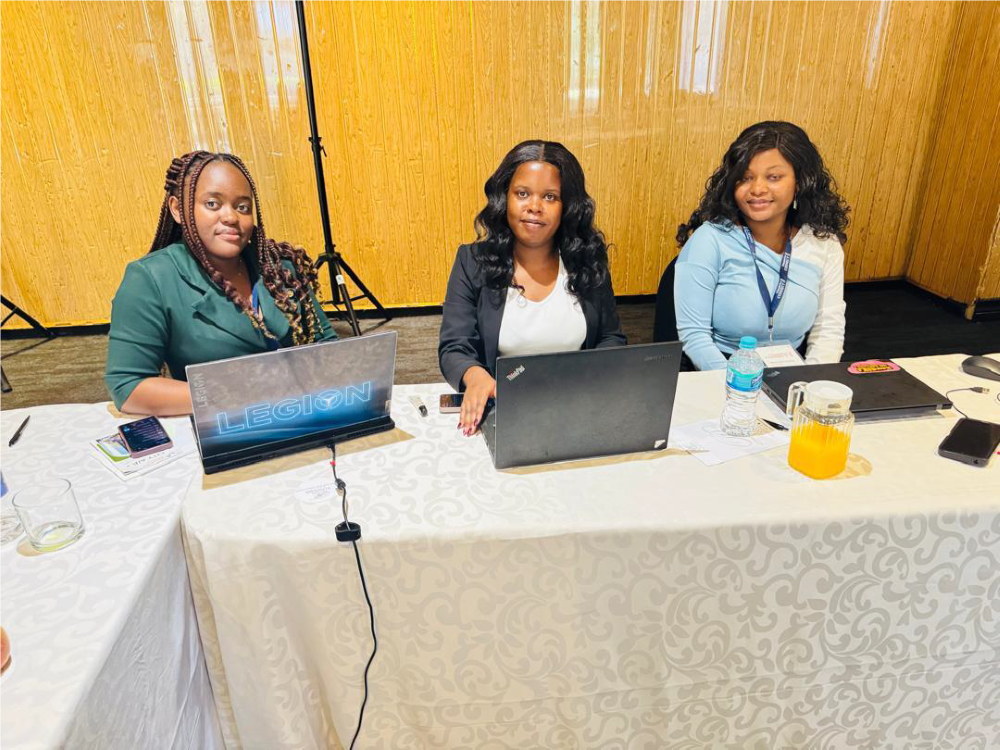
Coming in position two, Team Malawi consisting of Ms. Ekariorama Magaleta, Ms. Joana Mhone, and Ms. Yankho kamtukulo, developed a unique innovation titled “DisasterShield,” a Climate Preparedness & Resilience Scoreboard for Households in Uganda. The innovation introduced a web-based application designed to empower households with tools for disaster preparedness. The project focuses on enabling users to assess their readiness through structured self-evaluations and personalized recommendations. Utilizing machine learning and real-time weather data, the system predicts the likelihood of specific climate-related disasters and stores anonymized user data to support disaster planning and response efforts. This project aims to enhance community resilience by promoting proactive engagement and informed decision-making.
Position Three: Team Lesotho – EcoFleet
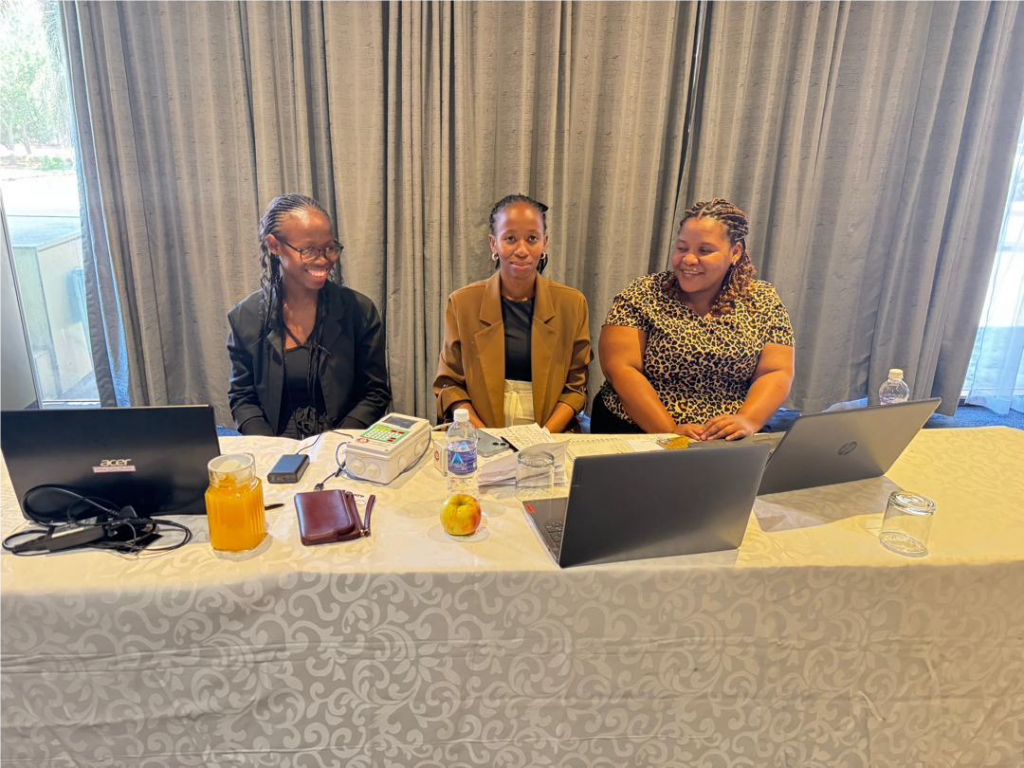
Team Lesotho grabbed position three with an innovation titled “EcoFleet” which is an Intelligent Monitoring and Emission Profiling for Used Car Imports Using AI and IoT. The EcoFleet innovators developed an AI and IoT-based emissions monitoring system specifically for used vehicles in Lesotho. The project aims to reduce urban air pollution and enhance public health by integrating smart sensors for real-time emissions data. The system detects and evaluates vehicle emissions, offering actionable insights for policymakers and regulators. The project emphasizes the need for a scalable, context-specific solution to address vehicle-related carbon emissions in resource-poor settings.
Position Four: Team Eswatini – GreenTrack
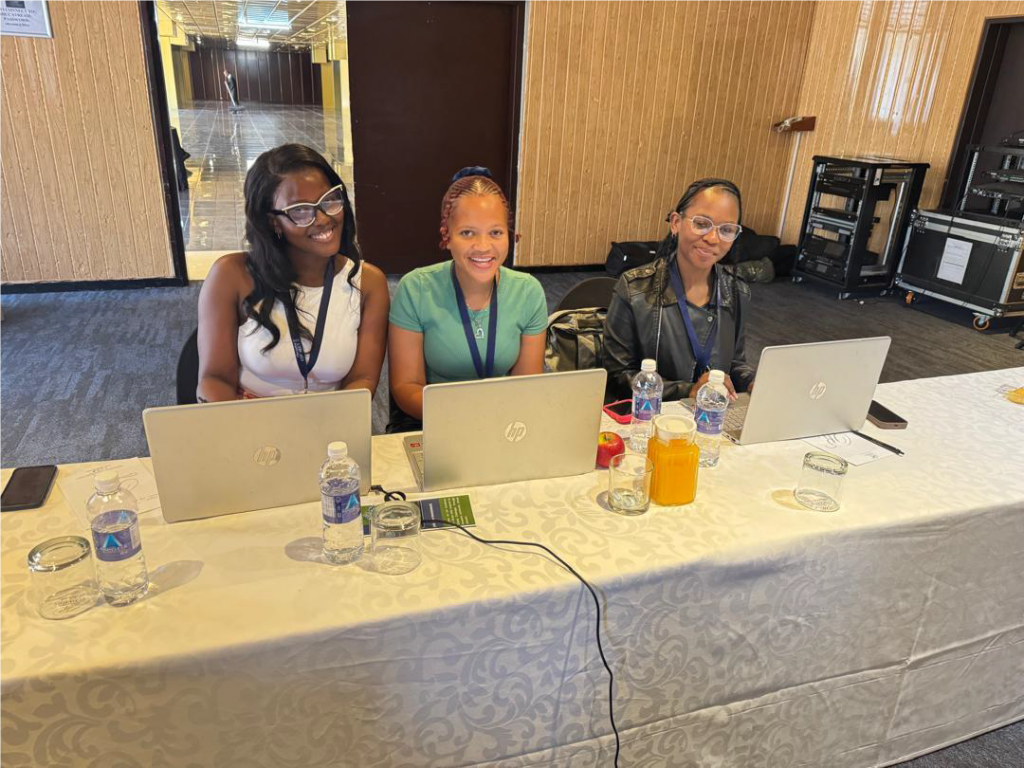
The “GreenTrack” presented by Team Eswatini consisting of Ms. Phumlile Dlamini, Ms. Asiphe Malangwane, and Ms. Nonduduzo Mkhaliph, showcased an Innovative Approach for Tackling Waste Management Through an ICT Solution. The Team developed a digital platform aimed at revolutionizing waste management in underserved communities. The application connects local governments, waste operators, and community members, facilitating improved communication and coordination. Key features include pickup requests, real-time scheduling, educational gamification, and data analytics. By streamlining waste collection processes and promoting environmental education, GreenTrack seeks to enhance community engagement and sustainability efforts, addressing the environmental challenges posed by ineffective waste management.
The Mentors’ Final Thought
While reliving the thrilling moments of the Women Hackathon 2025, the Mentors had this to say:
“As the facilitation team of the Women Hackathon 2025, we were deeply impressed by the ingenuity, collaboration, and determination demonstrated by all participants throughout the event. The Hackathon served as a powerful platform for women innovators to channel their creativity and technical skills toward addressing the urgent challenges of climate change. From the initial hybrid phase to the final in-person showcase at Rainbow Towers Hotel, each team exhibited a strong commitment to developing impactful solutions that enhance climate resilience and preparedness in urban environments. The final four teams, in particular, stood out for their clarity of vision, depth of research, and potential for real-world application. It was a privilege to support and guide these talented women, and we are confident that the ideas born from this hackathon will continue to evolve and inspire meaningful change. “
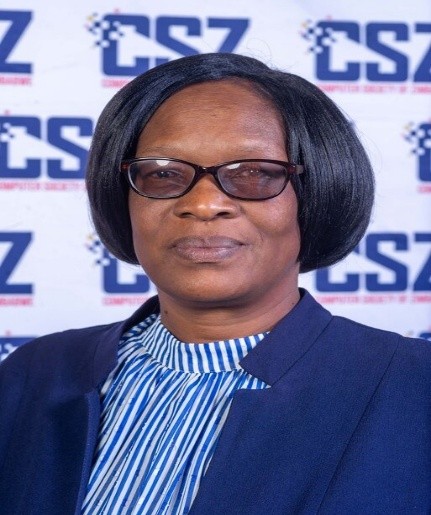
CEO, Zimbabwe Research and Education Network (ZIMREN) (Zimbabwe)

Dean, School of Information Science and Technology at the Harare Institute of Technology (Zimbabwe)

Lecturer, School of Information Science and Technology at the Harare Institute of Technology (Zimbabwe)
On the whole, The Hackathon 2025 presented an enabling environment where the participants engaged in discussions, shared insights, and received feedback from mentors. The event highlighted the importance of women’s contributions to climate action and fostered a collaborative spirit in addressing global environmental challenges. The Hackathon not only inspired creativity but also strengthened the community of women innovators committed to climate resilience.