

Keynote Speakers

Professor Hellicy C. Ng’ambi is a Professor of Business Leadership, founder and CEO of Mutepa RARE Solutions, and author of RARE Total Leadership: Leading with the Head, Heart and Hands, which promotes Responsible, Accountable, Relevant and Ethical leadership. She was the founding Vice-Chancellor of the University of Kabwe and previously served as Vice-Chancellor of Mulungushi University and Kwame Nkrumah University, becoming the first woman appointed to this position in Zambia. During her 18½ years at the University of South Africa, she held several senior leadership positions, including Executive Dean of the College of Economic and Management Sciences, overseeing more than 200,000 students. Professor Ng’ambi holds a Doctorate in Business Leadership, an MSc in Management and an MBA. Her research focuses on leadership and organisational effectiveness in Africa. She has published extensively and received numerous accolades, including the 2017 Continental Lifetime Achiever Award. She has served on several prominent boards, including UbuntuNet Alliance, the Lusaka Securities Exchange and the Bank of Zambia, frequently as chairperson or vice-chairperson. An internationally recognised speaker and leadership expert, she has championed ethical leadership, institutional transformation and higher education development across Africa.

Lise Fuhr joined GÉANT as CEO in November 2024. Before joining GÉANT she served as Director General of ETNO (now Connect Europe), the Brussels-based association representing Europe’s leading telecom operators, for nine years. In August 2022 Lise became a member of the United Nations Internet Governance Forum Leadership Panel. From 2024- 2025 Lise was Chair of the Danish Cyber security organisation “Security Tech Space”. Between 2017 and 2024, Lise was a Board member of European Cyber Security Organisation. From 2016-2022 Lise served as Chairwoman of the Boards of Public Interest Registry (.org domain name registry) and the Public Technical Identifiers (PTI), formerly IANA, and affiliate of ICANN. Lise rejoined the PTI board in October 2025 as Chairwoman for a three-year term. From 2009 to 2016, Lise was Chief Operating Officer of DK Hostmaster and DIFO, the company managing .dk domain names. From September 2014 to October 2016, Lise also chaired the Cross Community Working Group for the IANA Stewardship Transition, building on her strong network within the internet community. Lise has over 20 years of experience within the internet, technology, and telecoms industries and is a lifelong member of ATV, the Danish Academy of Technical Sciences, an independent think tank.

Abigail Essel is Project Manager at the West and Central African Research and Education Network (WACREN), where she coordinates regional programmes connecting institutions, services and communities across the research and education ecosystem. Her work brings a practical perspective to the challenge of moving beyond standalone institutional repositories towards connected research infrastructure that supports interoperability, persistent identification, discovery, preservation and wider visibility of African research. With a background in Computer Science and Engineering, an MSc in Engineering and Management, and professional certifications in project management and data protection, Abigail works across technology, procurement, partnerships and programme delivery to strengthen sustainable digital research infrastructure across West and Central Africa.

Prof Madara Ogot is an accomplished executive and science policy leader with a strong record of advancing Africa’s research and innovation agenda. Currently, he serve’s as the CEO of UbuntuNet Alliance, where he has led in the development of continental digital infrastructure, secured major development partner investments, and enhanced collaboration among NRENs in Eastern and Southern Africa. He was Deputy Vice-Chancellor in Research and Innovation at the University of Nairobi and Academic Affairs at Maseno University. As an advisor to governments, regional bodies, and multilateral agencies, he has influenced legislation and policy frameworks that shape Africa’s STI landscape.

Omo Oaiya is Chief Strategy Officer at the West and Central African Research and Education Network (WACREN), where he works on the evolution of NRENs into platforms for trusted digital research and education services across Africa. As WACREN’s first Chief Technology Officer, he helped lay the technical foundations for regional research and education networking in West and Central Africa. Omo co-founded LIBSENSE, a pan-African initiative bringing together NRENs, libraries and research communities to advance open science and strengthen African scholarly communications, now formally led by WACREN. He also initiated TrustBroker Africa, which brings African NRENs and their partners together to strengthen cybersecurity maturity and resilience. He is a certified SIM3 Auditor. Across these initiatives, his work is concerned with a central challenge for the next phase of Africa’s digital research infrastructure: how the connectivity and services built over successive generations of AfricaConnect can be underpinned by sustainable, interoperable and locally governed trust infrastructure.
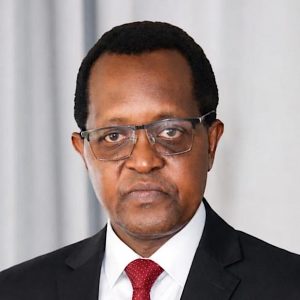
Chimwemwe Matemba is the current Digital Malawi Acceleration Project (DMAP) Project Manager. He is an ICT public investment specialist with more than 20 years in the sub-sector in Malawi and Botswana. Over this period he has accrued valuable insights from leading World Bank digitization projects in Malawi and managing ICT policy and infrastructure programs in Botswana. Before that, he worked at the ICT regulator in Malawi, in the very early days of my career. “It does not need saying that we are in the grip of one of the greatest societal transformative epochs in the history of mankind, the so-called fourth industrial revolution (4IR). Admittedly, access to and utilization of digital technologies from artificial intelligence (AI) graphic processing units (GPUS) to online systems to capital to 21st century skills are not equitably spread between the North and the South. This is where public ICT investments comes in.” Chimwemwe is an engineering graduate from the University of Malawi and holds a Master’s Degree from the University of West Indies.

Michuki Mwangi is a Distinguished Technologist at the Internet Society, where he leads their programmes focused on ensuring people everywhere have access to affordable, reliable, and resilient Internet. This includes the Internet Society’s work on Community-Centered Connectivity and Internet Insights and Innovation, which provides trusted, actionable data about the health, availability, and evolution of the Internet. He is also a member of the Internet Society’s executive leadership team, where he provides expertise to drive the development of forward-looking initiatives. Prior to joining the Internet Society in April 2008, Michuki served as the Administrative Manager at the .KE ccTLD registry (KENIC) and as president of the Africa Top Level Domain Association (AfTLD). At the same time, he volunteered his technical expertise to support the growth of the Kenya Internet Exchange Point (KIXP) and served on the board of the Technology Service Providers Association of Kenya (TESPOK). He currently volunteers as a member of the KENIC ICT committee, providing technical guidance to the management and board.
Pre-Conference Events
All pre-events shall be held at the Lifestyle Boutique Hotel, except the UA Board meeting that shall be held at the Alliance’s offices.
Monday October 26, 2026
Lifestyle Boutique Hotel
Closed Meeting: By Invitation Only
UbuntuNet Alliance’s annual two-stage Women Hackathon is funded by the European Union under the AfricaConnect4 project. Stage 1 is held online with teams of young women from the Eastern and Southern Africa competitively recruited. Selected participants were mentored by academic and industrial experts and guided to develop innovative green innovation, digital climate change adaptation and mitigation solutions. Webinars on topical issues were mounted to impart relevant skills and build confidence among the future women technology leaders. In addition, the teams developed innovative proof-of-concepts tackling climate mitigation and adaptation with the potential to be developed further through to commercialisation. The top four teams were invited to Stage 2 – The In-Person Hackathon, collocated with the annual UbuntuNet Conference, to further refine and improve their concepts.
Final Teams and Projects.
- “Herd-Metrics: An IPCC-Based Mobile Application for Livestock Methane Estimation and Feed Optimization in Botswana” Anesu Kahari, Goaboane Otsebe Annastacia Modirwagale. BOTSWANA.
- “Green-Lens: An AI-Powered Dual-Channel Environmental Damage Detection and Community Reporting Platform” Prisca Kaliati, Charity Kampanje, Alice Mandalasi. MALAWI
- “Afri-Node Tech: A Scalable, Low-Cost IoT Early Warning Architecture for Transnational Climate Adaptation and Economic Resilience across Sub-Saharan Catchments.” Athanasia Kachewa, Lilian Msaky, Oliva Sangawe, TANZANIA
- “Eco-Kubatana: A Community Climate Resilience Platform.” Kudakwashe Chivunga, Ashleigh Mabaire Nyarai Nedziwe. ZIMBABWE.
Lifestyle Boutique Hotel
Closed Meeting: By Invitation Only
The Women-in-Tech Leadership Programme, funded by the European Union under the AfricaConenct 4 project, seeks to develop the leadership potential of women in technology already employed within the Alliance’s R&E ecosystem (NRENs and connected institutions) by preparing and motivating them to actively seek and take up leadership positions within their organisations. Studies have shown that where women are represented in an organisation’s leadership, the organisation is more likely to hire women at all levels, creating a pipeline of female talent.
Tuesday October 27, 2026
Lifestyle Boutique Hotel
Closed Meeting: By Invitation Only
Lifestyle Boutique Hotel
Closed Meeting: By Invitation Only
Wednesday October 28, 2026
Lifestyle Boutique Hotel
Closed Event. By Invitation Only
Lifestyle Boutique Hotel
Closed Event. By Invitation Only
Lifestyle Boutique Hotel
Closed Meeting: By Invitation Only
UbuntuNet Alliance Offices – Boardroom
Closed Meeting. By Invitation Only
Main Conference Programme
All conference sessions shall be held at the Pearl Convention Center.
Thursday October 29, 2026
REGISTRATION AND ACCESS TO CONFERENCE VENUE
Name tag collection and check-in will begin at 7 AM
To ensure a smooth start to UbuntuNet Connect 2026, please take note of the check-in and venue access process for all attendees:
1. Registration and Name Tags
There is NO onsite registration for the conference. Upon arrival at the venue, please proceed to the marked check-in area that is organised into three stalls, grouped alphabetically by the first letter of your last name. Our friendly team will assist you in locating the correct stall. Each attendee will receive a conference package that includes a personalised name tag with a unique QR code. A conference official will scan this QR code during check-in to confirm your attendance and grant access to the conference areas.
2. Conference Officials
Look out for Conference Officials wearing “Here to Help” T-shirts. They will be stationed throughout the check-in area to guide you, answer questions, and ensure you have everything you need.
3. Information Desk
An Information Desk will be available near the registration area for any additional support, updates, or inquiries you may have during the event.
Room: Main Hall
Session Chair: Prof Madara Ogot, CEO UbuntuNet Alliance
Opening Remarks
Mr Solomon Dindi, CEO MAREN (5 mins)
Chair of the Board, MAREN (5 mins)
Prof Helicy Ngambi, Chair of Board, UbuntuNet Alliance (5 mins)
EU Delegation Malawi (5 mins)
Official Address and Conference Opening (20mins)
Keynote Address 1: “UbuntuNet Alliance at 20.” Prof Helicy Ngambi, Chairperson UbuntuNet Alliance, MALAWI (20 mins)
Keynote Address 2: Lise Fuhr, CEO GÉANT, NETHERLANDS (20 mins)
Take some time to visit the exhibitions and network.
Room: tbd
Session Chair:
Agentic AI for Fast-Tracking the Development of University Management Systems: A Proof-of-Concept Demonstration. Liberty Dandira, Midlands State University, ZIMBABWE
AI-Driven Recovery of Missing ETD Metadata for Interoperable Institutional Repositories in Zambia. Adrian Chisale. The University of Zambia, ZAMBIA
Neural Network-Based Estimation of High-Performance Computing Job Costs in African Research and Education Networks. Joram Kiyemba, Research Data and Communication Technology, UGANDA
Room: tbd
Session Chair:
SafeLink AI: Using Natural Language Processing to Detect and Automatically Block Localized Phishing Inside Institutional Networks. Glory Mwakiseghile, Malawi Life Spheres, MALAWI
From Ransomware to Resilience: A People-Centred, Co-Designed Cybersecurity Framework for Zimbabwe’s Research and Education Institution. Takudzwa Rusike, Harare Institute of Technology, ZIMBABWE
Beyond Traditional Authentication: Strengthening Digital Trust and Cybersecurity through Federated Single Sign-On with Keycloak. Fredrick Tamale RENU, UGANDA
Room: tbd
Session Chair:
Gender-Responsive Capacity Building Through Intergenerational Mentorship for Female Tech Students. Pamela Chogo, Nelson Mandela African Institute of Science and Technology, TANZANIA
Financing Inclusive Digital Knowledge Ecosystems: The Role of NREN Finance Practitioners in Advancing Gender Equity and Affordable Access to Research and Education through UbuntuNet Alliance. Elizabeth Paulo, TERNET, TANZANIA
Beyond Access: A Comparative Study of Inclusive Electronic Resource Services and Digital Research Support at the University of Zambia, Harare Institute of Technology, and North-West University Libraries. Matildah Mercy Muchinga, The University of Zambia Library, ZAMBIA
Room: tbd
Session Chair:
Shaping Digital Horizons Through Communities of Practice: A Decade of Lessons from SomNOG Community in Somalia. Hussein Hassan Yusuf , SomaliREN, SOMALIA
Beyond Connectivity: Leveraging CNaaS, Community Wi-Fi Sustainability Models, and Customer-Centric Innovation to Drive Institutional Sustainability and Digital Transformation in Uganda. Kaboggoza Rajjab, RENU, UGANDA
Safeguarding Online Assessments in the Age of AI: Lessons from KENET’s Community-Driven Approach to Affordable and Inclusive Proctoring. Zeinab Mzungu, KENET, KENYA
Take some time to visit the exhibitions and network.
Room: tbd
Session Chair:
Operationalising Sovereign AI and Workflow Automation for Scalable Financial Management in National Research and Education Networks. Leen Nambozo RENU, Uganda
Advanced Machine Learning Techniques for Detecting and Filtering Insincere Questions in Somali: Enhancing Digital Knowledge Platforms in Africa. Hanad Mohamud Mohamed, Jamhuriya University of Science and Technology, SOMALIA
Towards an NREN-Orchestrated AI and High-Performance Computing Infrastructure for African Research and Education. Everlyne Mwangi, Mount Kenya University, KENYA
Room: tbd
Session Chair:
Leveraging ai and open threat intelligence to maximise cyber resilience in African research and education networks. Rexa Agness Mphuwa, Malawi Research and Education Network (MAREN), MALAWI
Developing a Cybersecurity Awareness Framework for Institutions of Higher Learning in Lesotho. Mamoqenelo Morolong, National University of Lesotho, LESOTHO
Enhancing Digital Security for Students with Visual Impairments in Selected Colleges of Education, Zambia. Sarah Ndume, Malcolm Moffat College of Education, ZAMBIA
Room: tbd
Session Chair:
tbc, SEACOM
Design and Performance of Low Bandwidth Telemedicine Networks in Somalia: A Case Study on Telemedicine Implementation. Ali Hilowle Ali, Ministry of Health & Human Services, SOMALIA
Virtualising MPLS-TE Path Computation. Geoffrey Luora, Kenya Education Network (KENET), KENYA.
Room: tbd
Session Chair:
Beyond the Digital Graveyard: Frictionless DSpace Workflows through Automated Metadata Ingestion. Wesley Barry, TENET, SOUTH AFRICA
When the Repository Breaks: Technical Debt and Operational Challenges at UWC. Ricardo Davids, University of the Western Cape, SOUTH AFRICA
Persistent Identifiers for African Knowledge Systems: Scaling DOCiDTM through the Africa PID Alliance-UbuntuNet Alliance Partnership. Harrison Weda- Training Centre in Communication, KENYA
Take some time to visit the exhibitions and network.
18:00hrs Buses PROMPTLY leave from designated hotels. Please arrive at the front of the hotels at 17:45hrs for boarding. Ensure you are wearing your conference name tag.
Friday October 30, 2026
Name tag collection and check-in starts at 7 AM
Room: Main Hall
Session Chair: Harold Bowa, UbuntuNet Alliance
Keynote Address 3: “Beyond the Repository: Connecting African Research for Discovery, Preservation and Impact.” Abigail Essel, Project Manager, WACREN (20 mins)
Keynote Address 4: IOI Fund (20 mins)
Keynote Address 5: “Unlocking Potential: Elevating Open Institutional Repositories in Africa for Global Impact” Prof Madara Ogot, CEO UbuntuNet Alliance (20 mins)
Take some time to visit the exhibitions and network.
Room:
Session Chair: tbd
Advancing Diversity, Equity, and Inclusion in the Research Ecosystem: A Bibliometric and Open Science Perspective. Methembe Mhlope, Gwanda State University, ZIMBABWE
AI Literacy, Usage, and Perceptions Among Female Academics in Selected ZAMREN Member Universities in Zambia. Charity Meki Kombe, Mulungushi University, ZAMBIA
From Representation to Impact: Experiences of Female Engineers in Strengthening Research and Education Network Infrastructure at MAREN. Olivia Mkandawire, Malawi Research and Education Network (MAREN), MALAWI
Room: tbd
Session Chair:
NREN–Conservation Authority Partnerships: Enabling Real-Time Biodiversity Data Pipelines for Zambia’s Wildlife Departments. Chrisbaron Chali, Mulungushi university, ZAMBIA.
Research Data Sovereignty and Policy in the Southern African Development Community (SADC): A Comparative Analysis of South Africa and Tanzania. Grace Msoffe , The University of Dodoma, TANZANIA
Standing tall @20: Celebrating the UbuntuNet Alliance’s Gains as a Regional REN and AfricaConnect Programme Implementation Partner. Eliakim Okundi, UbuntuNet Alliance, MALAWI
Room: tbd
Session Chair:
Beyond the Campus Edge: Solar-Powered Infrastructure for Resilient and Inclusive Connectivity. Alexius Chipalamwazani, MAREN, MALAWI
eduroam-as-a-service, no RADIUS required. Guy Halse, TENET, South Africa
tbc, BCS
Room: tbd
Session Chair:
The Ethiopian DataCite Consortium: A Strategic Gateway to Interoperable National Open Research Infrastructure. Tekleweyni Geday, Mekelle University, ETHIOPIA
Rethinking Digital Transformation in Academic Libraries in Lesotho: A Governance-Centred Framework from a Small-State Perspective. Joalane Moloantoa, Lesotho National Library and Archives, LESOTHO
Building a Sustainable African DSpace Community through Regional CollaboratioN. Revelation Nyirongo, UbuntuNet Alliance, MALAWI
Take some time to visit the exhibitions and network.
Room: Main Hall
Session Chair: Prof Madara Ogot, CEO UbuntuNet Alliance, MALAWI
Women Hackathon 2026: Lightning Talks and Awards
5-minute lightning talks from four teams and awards (45 mins)
Keynote Address 6: “Digital Malawi: Advancing National Digital Transformation through Research and Education Networks” (20 mins). Chimwemwe Matemba, Digital Malawi Acceleration Project Manager, Public Private Partnership Commission, MALAWI
Keynote Address 7: “From Connectivity to Capability: Reimagining NRENs as Digital Infrastructure Platforms” (20 mins). Michuki Mwangi, Internet Society, KENYA.
Keynote Address 8: “From Connectivity to Trust: Building Africa’s Digital Identity Infrastructure for Research and Education” (20 mins) Omo Oaiya, WACREN, GHANA
Closing
Prof Helicy Ngambi, Chair of the Board of Trustees, UbuntuNet Alliance
Take some time to visit the exhibitions and network.